
Four people, two countries, five languages
Senior engineers rented by the month. For the build your team doesn't have the people for.
What we're actually for
Most engineering companies want to be somebody's technology partner. We want to be the people who build the thing you haven't got the people for, write down how it works, and stay on it so it doesn't quietly stop.
That comes in four shapes, and they're on the services page with prices. We can be the technical half of a first-time product, the tech lead a company without one has never been able to judge a hire for, the one skillset an existing team hasn't taken to production yet, or simply extra hands inside a window with an end date.
What changes between them is how much of the technical leading we do. At one end we hold the decisions the way a cofounder would. At the other your team decides and we build what you've already decided. Everything else, the Monday report, the four hour reply, two people per system, is the same in all four.
That's a smaller ambition on purpose. It's also the thing most companies our clients' size actually need and can't buy anywhere, because the good agencies want a bigger project and the cheap ones disappear.
We're a small team inside a larger studio, which means we're not trying to grow this into something with sixty people. Twelve developer days a week between us, two clients at a time. When we're full, we say so.
How we work
Five habits. They're the reason a solo founder and a dev house with twenty engineers can both hand us work and get the same result, whichever of the four paths they're on.
01
We brief ourselves
You don't have to write a specification for us. We read what's there, sit with the people doing the work by hand, and come back with the brief written down for you to correct. If you had time to write the brief, you probably wouldn't need us.
02
We work without being managed
Nobody on your side has to chase us for status or unblock us daily. We pick the next thing, we say what we picked, and we say what got in the way. You stay the one who decides what matters. You don't become our project manager.
03
We decide changes once a month, in daylight
Good ideas are what pull a build off course, not bad ones. So anything you raise that isn't on the plan gets written down and not started, you see it in that week's Monday report, and once a month we go through the whole list together and decide what moves into the plan. Nothing gets added anywhere else.
04
We write down how it works
Every build leaves documentation, access in your names, and a plain-language explanation of what happens when it breaks. It's a system you own. If we stopped tomorrow, somebody else could pick it up on Monday.
05
We tell you early when we're the wrong people
On the first call, in the planning, and mid-build if it changes. We also publish how much capacity is left, so nobody is sold a start date we can't keep. Eight of twelve developer days a week are still available.
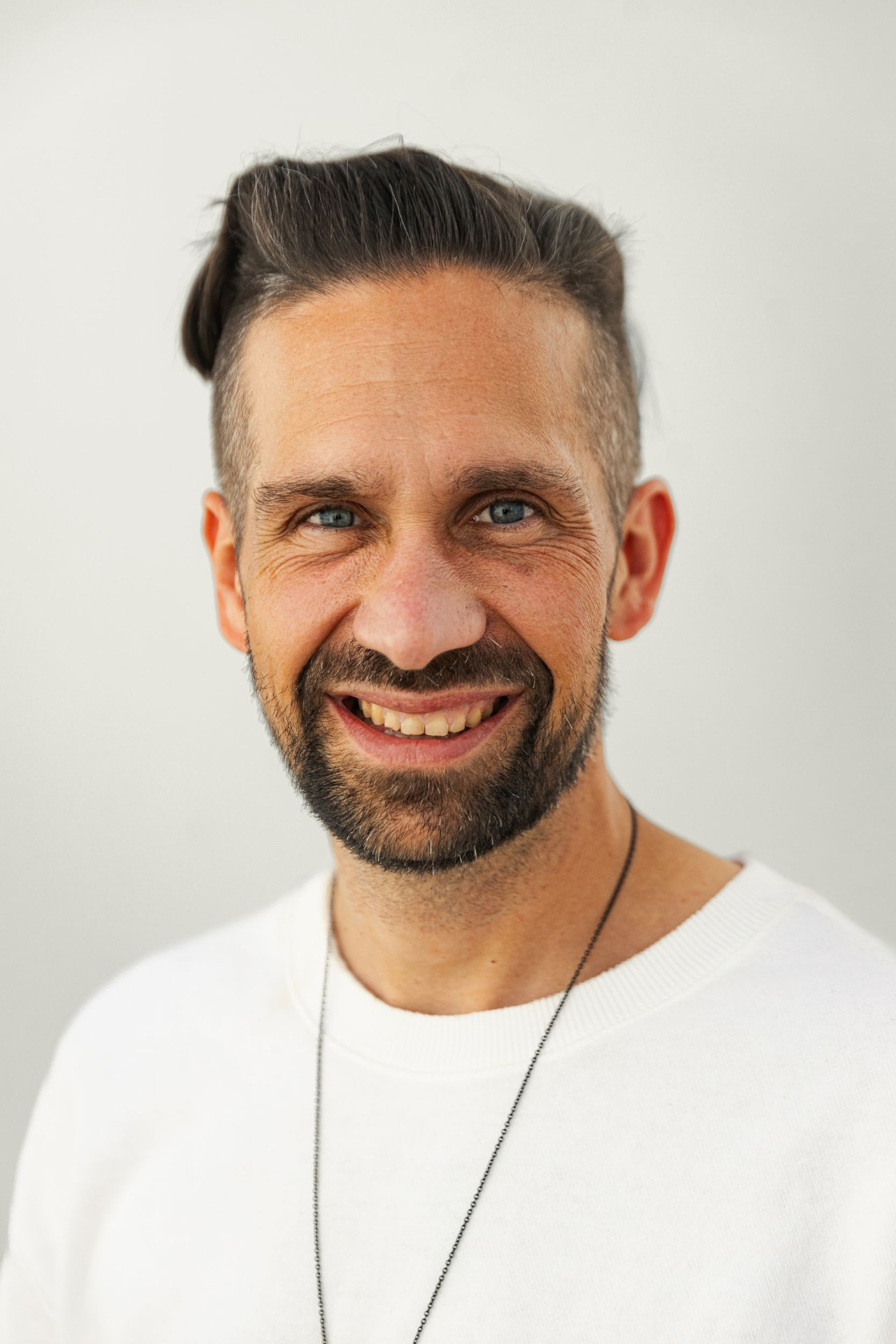
Carsten Pfisterer
Commercial, and the named contact on every German contract
German, based in Lisbon. Twelve years inside Adidas and Wayfair before this: marketing scaled across more than 500 Reebok stores, and a B2B line grown from EUR 1.5m to EUR 5m in eighteen months. RSM Erasmus Rotterdam.
He can run a technical first call without pulling an engineer into it, which is why the first thirty minutes with us doesn't cost anybody a morning. If something goes wrong on your project, he's the escalation endpoint, and he's the one who'll tell you about it before you ask.
Ilyes Ali Jeridi
CTO, architecture and AI
Big Data and AI Engineering. Built CodeSentinel, an enterprise platform running 14 specialised LLM agents in parallel, and NexusGraph, a distributed graph database in Go. Co-built Loyalisto, a SaaS loyalty platform using Apple and Google Wallet passes with QR ordering integration. MIME Laureate 2025. IBM TechXchange Top 100.
If your problem is depth rather than hands, he's the person you should be talking to, and he'll tell you honestly whether we've done it before.
Mohamed Amine Abbassi
Delivery and full-stack
Built mettaCofounder.ai end to end to production, including the full Stripe subscription lifecycle. Delivered a cross-platform mobile app for a German client solo, from architecture to deployment, with zero post-launch bugs reported. Built the backend cloud functions architecture, the iOS and Android release pipeline, and handled app store review resolution.
Also built a computer-use agent that operates a desktop environment autonomously using OpenAI vision, and a Twilio outbound voice agent with ElevenLabs TTS and DTMF keypress handling. Co-built Loyalisto, a SaaS loyalty platform using Apple and Google Wallet passes with QR ordering integration.
He has delivered various production projects for international clients in Germany and Portugal, all on time, with no post-launch bugs reported.
Olga Kirillova
Revenue architecture
Co-founder and CEO across the wider group. Owns the commercial systems and the referral network that most of our work comes through.
Where we sit
mettaEngineer is the engineering side of mettaStartup Studio, which has worked with more than 200 founders. It exists because clients kept asking the studio to build things, and because the two engineers who built our own product are better used building than idle.
That's the whole origin story. There isn't a bigger one.
Practical things
We work in German, English, French, Arabic and Russian.
German-language clients get German-language status updates and a German-native contact on the contract.
EU hosting by default. Data processing agreement ready before you ask for it.
We're a Portuguese company. If that matters to your procurement, ask on the first call and we'll tell you exactly how it works rather than making you find out later.
Thirty minutes with Carsten. Or with Ilyes if the question is technical.